Home › Road, Street, and Municipal Paving
Keep traffic moving smoothly with professional road paving in Phoenix, AZ. We partner with municipalities, HOAs, and developers to pave and resurface streets, intersections, and subdivision roads. Our crews are equipped for large scale projects, traffic control, and quality compaction. Contact us to discuss bid specs and schedule a site visit.
Precision Asphalt Phoenix provides professional road paving throughout Phoenix, AZ, Arizona and the surrounding area. Our licensed, insured crew delivers safe, clean, on-time work with a free estimate before anything begins. Call (602) 603-4424 or request your free quote.
Road and Street Paving in Phoenix Built for Heat and Heavy Use
Road paving in Phoenix is not just about putting down blacktop. Our summer heat, monsoon storms, and heavy traffic are rough on asphalt. Precision Asphalt Phoenix designs and builds road surfaces to handle all three.
For public streets, access roads, and municipal lanes, we start by looking at how the road is actually used. A neighborhood cul-de-sac that mostly sees passenger cars needs a different section thickness than a bus route or industrial street that takes daily truck traffic. We walk the site, measure existing conditions, and check drainage paths so we know where water currently sits, where it runs off, and where it undercuts the edge of the pavement.
In Phoenix, the most common issues we solve on existing roads are sun-baked raveling (surface aggregate raking out), reflective cracking from old pavement below, and alligator cracking from weak base or poor drainage. Instead of simply “overlaying” everything, Precision Asphalt Phoenix checks whether the underlying base can be reused, needs to be stabilized, or must be replaced entirely. That decision affects both cost and long term performance.
For new roads, local code requirements from the City of Phoenix, Maricopa County, or nearby municipalities are a key factor. We are familiar with local standards for section thickness, compaction requirements, and mix types, and we design the pavement structure to meet or exceed those standards so the project can be inspected and approved without costly rework.
How the Road Paving Process Works, Step by Step
Every road, street, and municipal paving project we handle follows a disciplined process so there are no surprises for the city, HOA, or private owner.
1) Evaluation and coring. We walk the entire alignment, document failed areas, and when appropriate take pavement cores to see what is under the surface. This tells us whether milling, full-depth reconstruction, or simple overlay is appropriate.
2) Traffic control and staging. For public streets or busy private roads, we create a traffic control plan with signage, cones, and flaggers where needed. We schedule work to keep trash trucks, school buses, and emergency vehicles moving. Often we pave in phases so one side of the street or one lane stays open while we work on the other.
3) Surface removal and grading. Depending on the project design, we mill off a specific depth of existing asphalt using a cold planer, or we saw cut and remove full sections with loaders and trucks. After removal, our crew regrades the base course, adjusts cross slope for drainage, and compact it with a steel drum and a vibratory roller to meet the specified density.
4) Base repair and stabilization. Any soft spots or pumping areas are excavated, rebuilt with aggregate base, and compacted. In some Phoenix soils, especially in areas with clay pockets or older irrigation, we add cement or lime stabilization to lock in the base so the new road does not settle and crack.
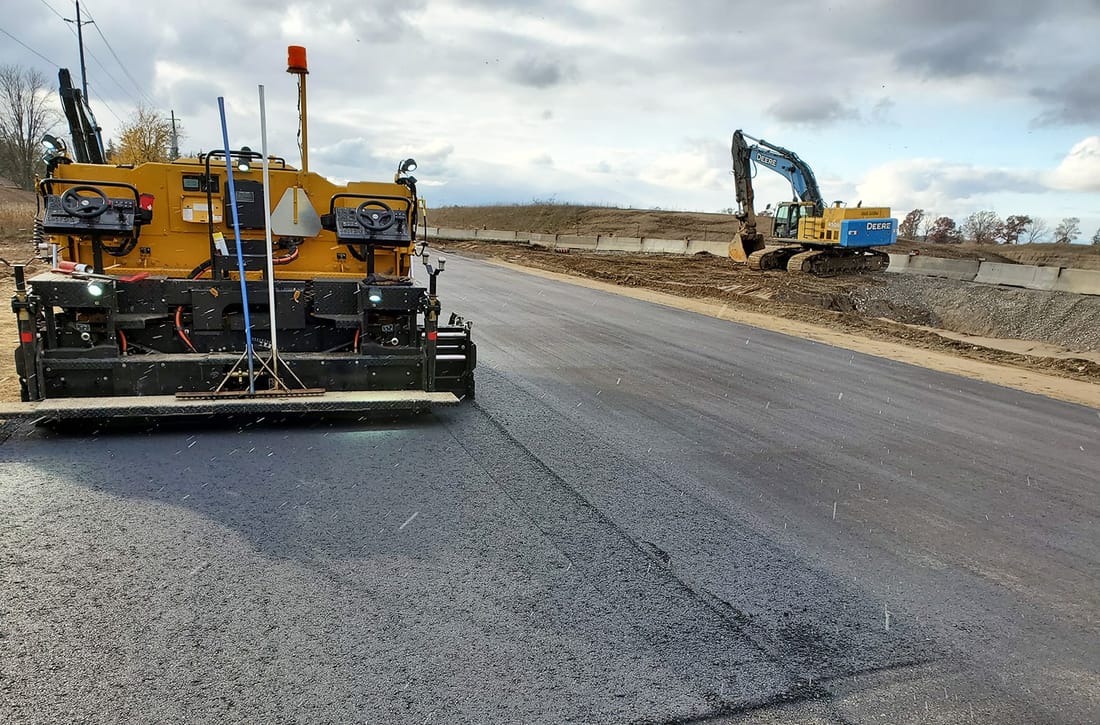
5) Asphalt paving. We use a self-propelled paver with electronic screed controls to place the asphalt mix at the designed thickness. For municipal streets we typically install a base course lift and then a finer surface course lift, each compacted with multiple passes of vibratory and pneumatic rollers while the mix is at the proper temperature.
6) Joint tying, finishing, and cleanup. Longitudinal joints are staggered and compacted carefully because they are common failure points in the Phoenix climate. We match new pavement to existing driveways and side streets with clean saw cuts and transitions. Once compaction testing is passed, we stripe the road, reinstall signs, and sweep the area so it is safe to reopen.
Materials, Design Choices, and What Drives Cost
Road paving costs in Phoenix depend mostly on four things: thickness, scope of base repair, mix design, and traffic control. Precision Asphalt Phoenix walks you through each item so you understand where your budget is going.
Thickness and structure. A lightly traveled residential street might perform well with a thinner asphalt section over a solid base. A bus route, fire lane, or industrial access road may require multiple lifts and a thicker overall section. The thicker the asphalt, the higher the material and trucking costs, but cutting thickness where traffic is heavy is a false saving that leads to early failure.
Base work. Many roads here were built decades ago with minimal base material or have been damaged by irrigation or leaky utilities. If the base is weak, any new asphalt will crack quickly. We explain where full-depth reclamation, spot base repair, or full reconstruction makes the most sense. Projects that require extensive base replacement and stabilization are more expensive up front, but they greatly reduce the chance of repeated patching in the same locations.
Mix design and options. In the Phoenix area most municipal agencies specify particular mix types and binder grades that can handle high surface temperatures. On heavier streets or intersections where vehicles turn sharply, we may recommend a stiffer mix or a modified binder to resist rutting. For some city and county work a rubberized asphalt surface course is required to reduce noise and improve durability, which slightly increases cost but often extends service life.
Traffic control and phasing. If your project involves a busy arterial, school zone, or critical access route, more extensive traffic control is needed. That means more signage, flaggers, and potentially night or weekend work to reduce disruption. Those items affect cost. For HOAs and private communities, we can often save money by coordinating with residents ahead of time so we can pave larger sections in fewer mobilizations.
Dealing With Phoenix Heat, Monsoons, and Long-Term Maintenance
Phoenix climate plays a big part in how we design and maintain roads. Precision Asphalt Phoenix accounts for both extreme heat and intense short bursts of rain when we plan your project.
Heat. Summer pavement temperatures can exceed 160 degrees on dark asphalt. If the asphalt binder is not rated correctly, surfaces can rut or become slick under turning traffic. We use binder grades appropriate for our region and avoid paving delicate surface lifts in the hottest part of the day when practical, so the mix does not cool unevenly or scuff as soon as traffic returns.
Rain and drainage. Monsoon cells will find every low spot and poorly graded gutter. On older Phoenix streets we often see standing water along the curb that quickly leads to edge cracking and raveling. When we design a paving project, we check cross slope, gutter grades, and existing inlets to be sure new asphalt sheds water to the right locations. In some cases we recommend small grade adjustments or new valley gutters to keep water moving instead of soaking your pavement edge.
Reflective and thermal cracking. Because of large day to night temperature swings, small cracks can open and close daily. When we overlay old roads, we may use crack sealing, fabric interlayers, or leveling courses to minimize reflective cracking from old joints. For heavily cracked streets, full-depth reconstruction of problem segments is usually more cost effective than repeated overlays.
Maintenance planning. For city agencies, HOAs, and private road owners, we can build a simple pavement management plan that includes crack sealing, localized patching, and periodic sealcoats or thin lift overlays. Scheduling these smaller tasks at the right intervals extends the life of the road and helps you forecast future budget needs instead of being surprised by major failures.
What Phoenix Owners Should Clarify Before Hiring a Road Paving Contractor
Choosing the right contractor for road paving is about more than the lowest price on paper. Precision Asphalt Phoenix encourages you to ask specific questions so you can compare proposals fairly.
First, make sure the scope clearly states how the existing pavement will be handled. Are they milling a specific depth, performing full-depth reclamation, or simply overlaying the current surface? A vague “overlay” description often hides the fact that base failures are not being addressed, which can shorten the life of the new road.
Second, insist on details for thickness and mix type. Your proposal should list the number of lifts, the thickness of each, and the mix design or at least the performance category that meets Phoenix or Maricopa standards. If two bids have very different total thicknesses, you are not comparing the same product.
Third, review the traffic control and phasing plan. Ask how access will be maintained for residents, businesses, school buses, and emergency vehicles. For HOAs or private communities, find out exactly how long each segment will be closed and how residents will be notified beforehand.
Fourth, confirm compaction and testing methods. Well compacted base and asphalt are critical to long term performance. Ask if density testing will be performed and who is responsible for it. We typically coordinate with third-party testing labs or comply with municipal inspection requirements so you have documentation that the road was built to spec.
Finally, discuss warranty terms and realistic expectations. No asphalt pavement in Phoenix will remain perfect forever, but it should not fail prematurely. We explain what is covered, how to spot early issues, and what maintenance you should budget for in the first 5 to 10 years. With a clear plan, your new or rehabilitated road can deliver many years of safe, smooth service for everyone who drives on it.