Home › Industrial and Heavy-Duty Asphalt Paving
Support heavy traffic and loads with industrial asphalt paving in Phoenix, AZ. We design thick section pavements for truck yards, loading docks, and manufacturing sites. Proper base construction and mix design help prevent rutting and failure under demanding use. Request a free consultation and engineered paving solution for your facility.
Precision Asphalt Phoenix provides professional industrial asphalt paving throughout Phoenix, AZ, Arizona and the surrounding area. Our licensed, insured crew delivers safe, clean, on-time work with a free estimate before anything begins. Call (602) 603-4424 or request your free quote.
Industrial asphalt paving built for Phoenix conditions
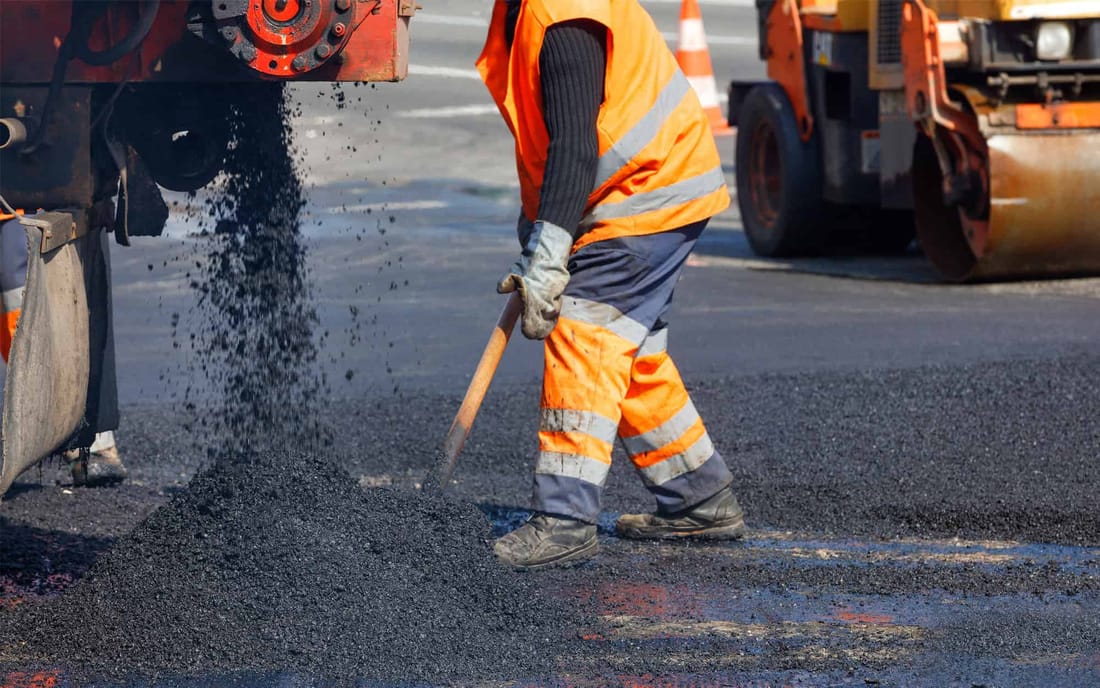
Industrial asphalt paving is very different from paving a small parking lot or driveway. At Precision Asphalt Phoenix, we design and build heavy duty asphalt surfaces to survive forklifts, loaded semis, dumpsters, and 115-degree summers without ruts or constant patching.
In Phoenix, extreme heat and heavy loads are the two main enemies of industrial pavement. Standard parking lot specs are not enough. We start every project with a site visit to see how your operation actually runs: where trucks turn, where trailers sit loaded for hours, how often forklifts travel the same paths, and whether there are fuel or chemical exposure areas. This tells us where we need thicker sections, stronger base material, or reinforced edges so your pavement performs for years instead of months.
We focus on industrial facilities across the Valley, including distribution centers, freight yards, concrete and asphalt plants, cold storage, manufacturing complexes, and large HOA or municipal service yards. Our goal is simple: build a pavement structure that matches the real abuse it will take so you are not shutting down lanes to repair rutting every summer.
How heavy duty asphalt paving is actually built
A durable industrial asphalt surface is all about what is under the black top layer. The process typically starts with demolition or scarifying of existing pavement, then precision grading. We use laser-guided equipment to set slopes toward drains so water does not sit in wheel paths or at dock doors, which is critical after monsoon storms.
Next comes the base. For industrial work in Phoenix we usually recommend 6 to 12 inches of compacted aggregate base for most facilities, and more in dock and dumpster areas. We import, place, and compact the base in thin lifts using vibratory rollers until we hit specific density targets verified with a nuclear gauge. If your site has soft or saturated soils, we may undercut and replace weak areas, or install a geogrid stabilization layer so the base does not pump and fail under truck traffic.
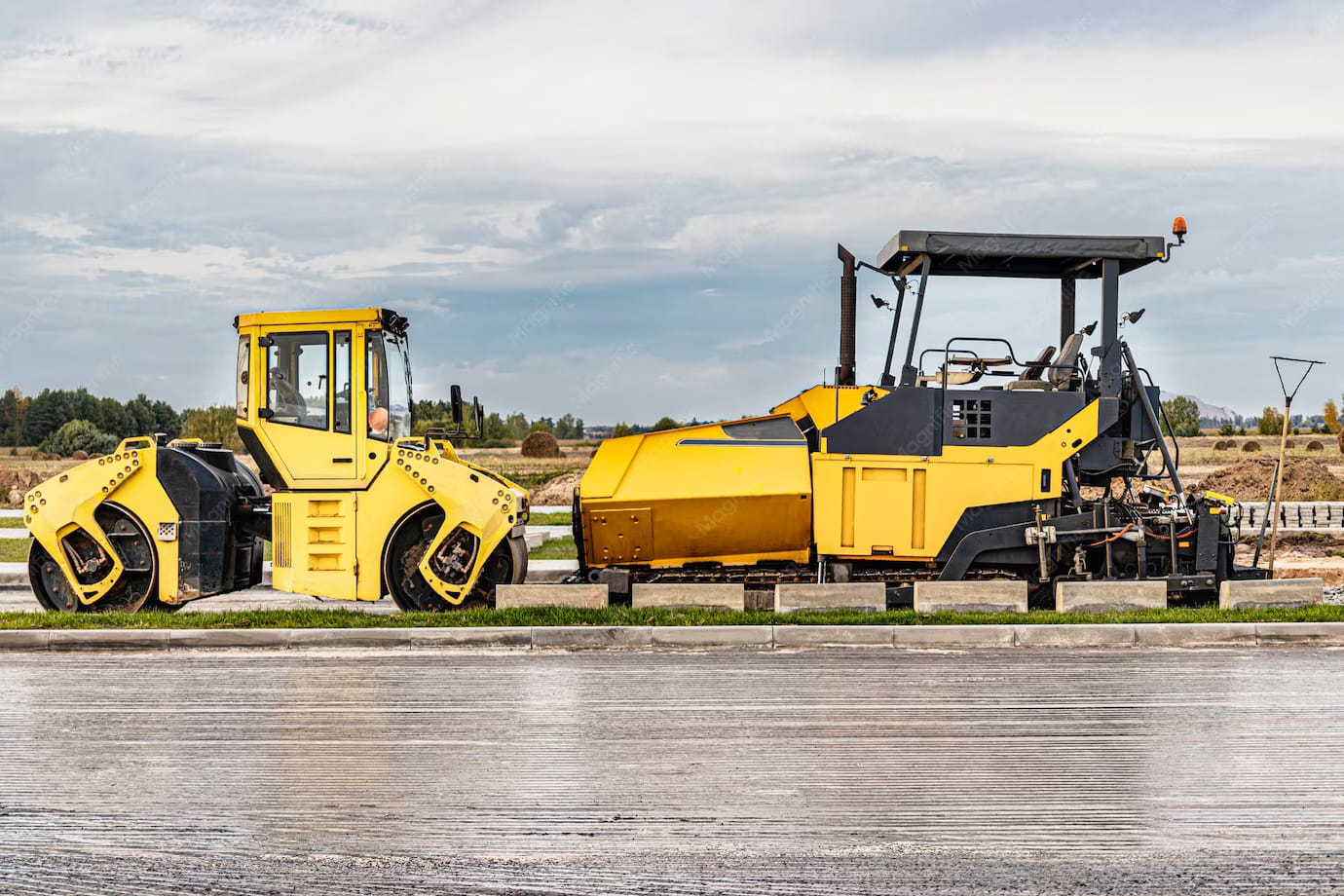
On top of the base, we install one or more lifts of asphalt. For heavy duty truck lanes and loading docks, we often recommend at least 3 to 4 inches of industrial mix, installed in two lifts. Each lift is laid with a paver, not just a skid steer, so the surface is even and consistent. Joints are offset between lifts to avoid creating a weak vertical seam. We compact while the asphalt is still within its optimal temperature range, which requires tight coordination in Phoenix heat so we do not lose workability before we achieve density.
At transitions to concrete (dock aprons, trench drains, or building slabs) we pay special attention to joint design. We bevel edges, tie into existing structures, and sometimes thicken the asphalt at those points so truck wheels do not create a bump that later becomes a pothole.
Mix designs, thickness options, and what affects cost
Not every part of an industrial yard needs the same pavement structure. Using a single generic spec for everything often costs more and still fails in high stress zones. Precision Asphalt Phoenix usually breaks a site into zones and assigns a custom mix and thickness to each.
For continuous truck lanes and turning areas, we often specify a heavier duty mix with a higher asphalt binder content and a tighter gradation to resist shoving and rutting. In auto parking or low load storage areas, a more standard commercial mix is usually appropriate and more cost effective. Dumpster pads, fuel islands, and areas where truck stands are common may require additional thickness or even concrete pads tied into the asphalt.
Key cost drivers include how much base repair is needed, total asphalt thickness, and how many different phases or mobilizations are required to keep your operation running. Deep failures or poor subgrade can add more to a budget than the asphalt itself, which is why we recommend coring existing pavement or test pits before finalizing a quote on older industrial sites. Access and phasing matter too. If trucks must keep moving, we plan night or weekend work and create temporary traffic paths or steel plates to keep forklifts and deliveries functioning.
We will walk you through options such as adding one extra inch of asphalt in the heaviest traffic lanes versus accepting a shorter lifecycle. For many Phoenix facilities, a small increase in upfront thickness pays for itself by delaying the first major mill and overlay by several years.
Solving common industrial pavement problems in Phoenix
If you already have issues like rutting in wheel paths, alligator cracking near dock doors, or ponding water that grows after every monsoon, we start by figuring out why. Simply putting new blacktop over a structural problem will not hold up under heavy traffic.
On many Phoenix industrial sites, we see failures caused by thin base material, inadequate compaction from earlier construction, or water trapped under the pavement at irrigation lines or old utility trenches. Our crews cut test sections, measure true existing thickness, and evaluate the base. In severe cases, we may recommend full-depth reclamation in bad areas, where we grind up the existing asphalt and base together, regrade and compact it, then pave a new surface. This often saves money compared with full removal and haul off.
Rutting from truck traffic is another common issue. When we see wheel paths sinking and pushing up on the sides, we know the mix, thickness, or base was not designed for the loads. The fix is usually to mill deeper in those lanes, reinforce or replace base, and rebuild with a heavier mix and increased thickness that matches the actual truck counts on your site, not a generic design table.
Drainage problems deserve special attention in Phoenix. Standing water accelerates oxidation and softens the base, especially at dock doors and gate entrances where trucks crawl or stop. We correct this by reestablishing slopes when we mill and pave, adjusting or replacing drains, or installing new valley gutters or concrete swales so water has a defined path off the pavement instead of sitting in front of your loading docks.
Planning, scheduling, and working around your operations
Phoenix weather allows industrial asphalt paving almost year round, but there are better windows if you want the smoothest process. Late fall and early spring usually give us cooler daytime temperatures that help compaction without the asphalt cooling too fast. In peak summer, we often shift heavy duty paving to night hours when the surface temperatures and ambient heat are more manageable, especially on wide open distribution yards that bake all day.
For active industrial sites, the bigger challenge is usually operations, not weather. Precision Asphalt Phoenix works with your team to phase the job so trucks still move and dock doors stay usable. That can mean paving half of a drive lane at a time, using temporary striping and cones, or building a new truck route first so we can close an old failing lane completely. On 24/7 facilities, we often pave specific zones overnight, then open them back up by morning when the asphalt has cooled enough for heavy loads.
Before we start, we review your safety protocols, truck flow diagrams, and shift changes so we can plan around peak times. We coordinate closely with security and yard managers so drivers know which gates and docks are open on each day. Our goal is to deliver a heavy duty pavement that outlasts your expectations while keeping your Phoenix operation moving throughout the project.
When you are ready to look at industrial asphalt paving options, we are happy to walk your site, discuss how your yard really works, and provide a phased plan so you know where to invest in extra strength and where you can save without sacrificing performance.