Home › Commercial Asphalt Resurfacing & Overlays
Refresh aging pavement with commercial asphalt resurfacing in Phoenix, AZ. Our team evaluates your parking lot or drive lanes and installs overlays where the base is still sound. This process smooths ruts and cracking, improves appearance, and extends pavement life at a lower cost than full replacement. Schedule a free resurfacing evaluation for your property today.
Precision Asphalt Phoenix provides professional commercial asphalt resurfacing throughout Phoenix, AZ, Arizona and the surrounding area. Our licensed, insured crew delivers safe, clean, on-time work with a free estimate before anything begins. Call (602) 603-4424 or request your free quote.
Commercial Asphalt Resurfacing for Phoenix Properties
Commercial asphalt resurfacing is often the smartest way to restore a worn parking lot or private drive in Phoenix without paying for a full tear out. At Precision Asphalt Phoenix, we specialize in resurfacing and asphalt overlays that add a fresh, durable driving surface on top of your existing pavement, provided the base is still structurally sound.
In our climate, the intense sun, dramatic temperature swings from 115°F days to cooler nights, and monsoon runoff all work together to oxidize the surface, dry out the binders, and open cracks. Resurfacing addresses these issues by repairing localized failures, then placing a new layer of hot mix asphalt over the old one. This new layer typically ranges from 1.5 to 3 inches, which is enough to smooth ruts, improve drainage, and extend the life of your pavement by 8 to 15 years when properly maintained.
We tailor each commercial asphalt resurfacing project to the type of property. A medical office or church parking lot has different traffic patterns and peak times than a shopping center or industrial yard. Precision Asphalt Phoenix plans staging and access so tenants, customers, and deliveries can keep moving while we work, and we schedule around peak business hours whenever possible.
How Our Resurfacing & Overlay Process Works
A successful commercial asphalt resurfacing project in Phoenix depends on careful evaluation and preparation, not just the new layer on top. When you call Precision Asphalt Phoenix, we begin with a detailed site assessment. We look for alligator cracking, base failures, rutting, drainage problems, and any heaving around tree roots or utilities. If more than roughly 25 to 30 percent of the area shows deep structural failure, we will recommend partial reconstruction instead of a simple overlay so you do not waste money on a short term fix.
Once resurfacing is confirmed as a good option, we start with cleaning. We use mechanical sweepers, blowers, and sometimes pressure washing to remove dust, loose aggregate, and oils. Phoenix dust is very fine and persistent. If it is not removed, the new asphalt layer will not bond properly. Any oil saturated spots are treated or milled out because oil prevents adhesion.
Next, we repair and level. Isolated potholes and badly broken sections are cut out, the underlying base is reworked or supplemented, and new hot mix is placed and compacted flush with the surrounding surface. Major cracks are routed where needed, cleaned, and filled with hot pour crack sealant so they do not reflect straight up through the new overlay.
We then apply a tack coat, which is a thin layer of asphalt emulsion sprayed over the existing pavement. In our dry Arizona air, the tack coat must be applied at the right rate and timing so it becomes tacky but not fully dry by the time the new mat goes down. This layer acts like glue between the old layer and new overlay.
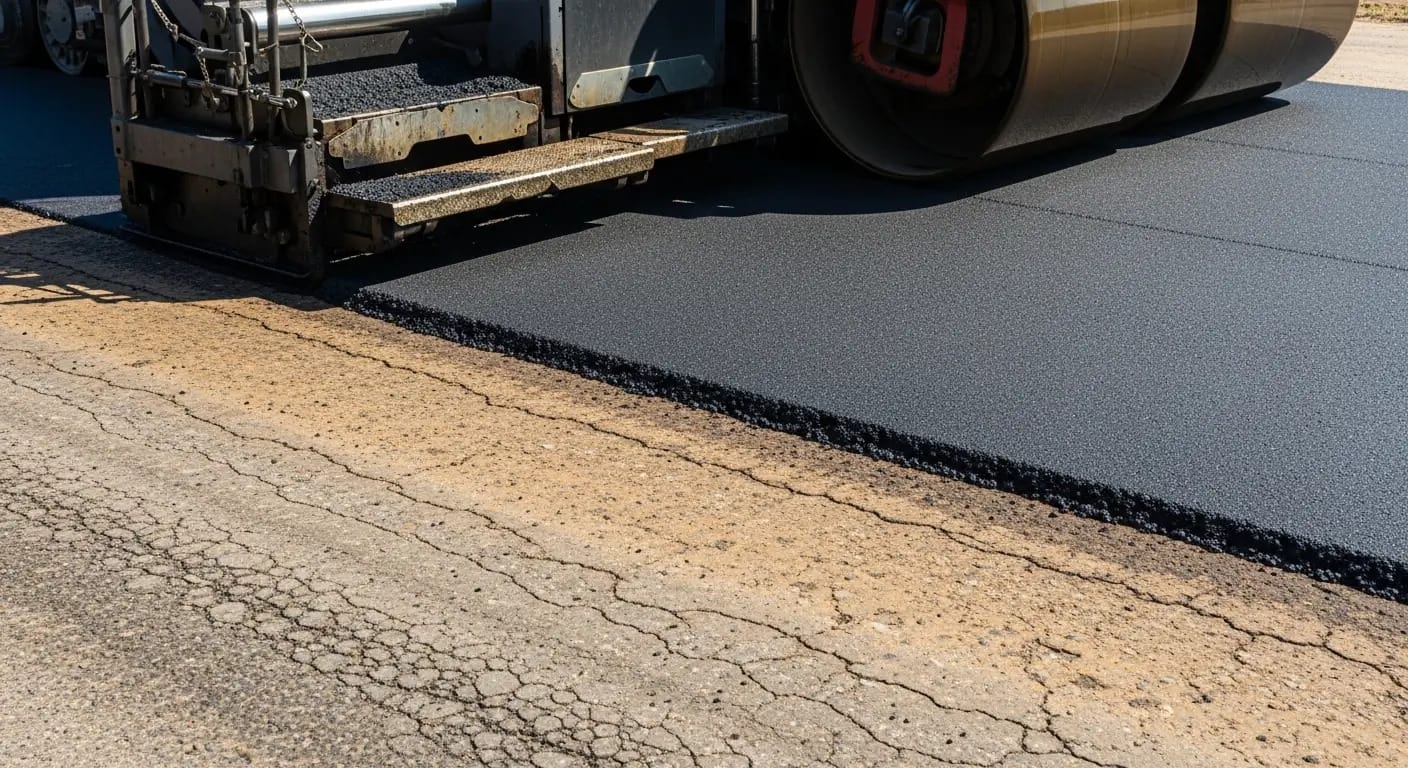
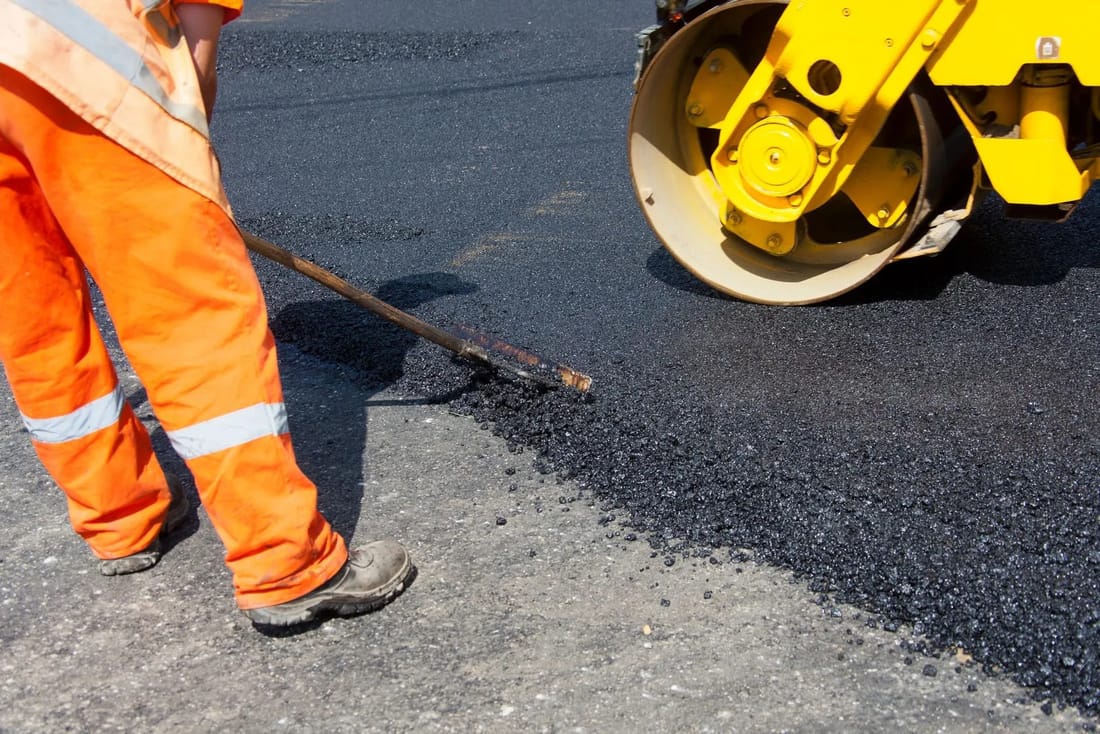
Finally, we lay the new asphalt surface using a paver to achieve a uniform thickness and slope. Our crews follow behind with steel drum rollers and pneumatic rollers for compaction. This ensures the new overlay is dense, smooth, and less likely to ravel or develop early rutting in the summer heat.
Material Options and Thickness for Phoenix Traffic Loads
Not every commercial asphalt resurfacing project uses the same mix or thickness. At Precision Asphalt Phoenix, we select materials based on traffic type, sun exposure, and drainage conditions.
For light use parking lots such as small offices or retail strips with mainly passenger cars, a 1.5 to 2 inch overlay using a fine gradation mix often provides a smooth finish and good appearance. For bus routes, delivery zones, or trash truck paths, we typically recommend thicker overlays, usually 2.5 to 3 inches, with a coarser, more stable mix that resists rutting under slow turning heavy loads.
Phoenix pavements face oxidation from UV exposure, so we typically specify mixes with polymer modified binders or performance graded binders appropriate for our high temperatures. This helps the overlay stay flexible enough to resist cracking yet stiff enough to resist shoving and rutting when the surface gets hot.
We also evaluate slope and drainage during design. If your existing lot already has standing water after monsoon rains, we may adjust overlay thicknesses across the site to subtly improve slopes without changing your concrete curbs. In some cases, localized milling is needed along joints, entrances, or ADA routes to maintain proper transitions and avoid trip hazards or steep cross slopes.
We will walk you through these material and thickness options, explain how they affect price and lifespan, and show you where it is worth investing in additional thickness or upgraded mix versus where a standard mix is fully adequate.
Cost Drivers and How We Control Your Budget
Commercial asphalt resurfacing is usually more cost effective than full reconstruction, but pricing still varies from property to property. The main cost drivers are the total square footage, overlay thickness, how much base repair is needed, and project complexity such as phasing and traffic control.
In Phoenix, older lots often have localized failures near dumpsters, drive lanes at entrances, and loading zones. Precision Asphalt Phoenix separates those high stress areas from the rest of the lot in our estimate. We may mill and deepen repairs in those zones, then tie them into a thinner overlay across the parking bays. This targeted approach keeps your overall cost down while reinforcing the areas that actually need extra strength.
Accessibility and staging also affect cost. If we can work in large, open passes, production is faster and your price per square foot drops. If the property has many small islands, tight drives, or requires work only during limited night or weekend windows, labor and equipment time increase. We discuss these factors up front and, when possible, propose alternative phasing that maintains access yet reduces mobilizations.
Another local factor is temperature. In summer, asphalt cools very quickly once it leaves the plant, especially on long hauls. We plan plant selection and trucking so we are not wasting mix that cools before proper compaction. That keeps your costs in line and ensures quality. Because materials are priced per ton, we measure and calculate overlay thickness and yield carefully so you receive the correct depth, not a thin layer that wears out early.
Common Overlay Issues in Phoenix and How We Prevent Them
Asphalt overlays can fail early if they are not designed for local conditions. Precision Asphalt Phoenix has seen the same recurring issues around the Valley, and we build our resurfacing approach to avoid them.
Reflective cracking is one of the biggest concerns. Existing cracks, joints, or utility trenches in the underlying pavement can telegraph through the new overlay if they are not properly treated. We mitigate this with thorough crack cleaning and sealing, localized milling or leveling in badly cracked zones, and in some cases the use of fabric interlayers or stress absorbing membrane over key joints or transitions.
Drainage problems are another frequent issue. In Phoenix, even a short monsoon storm can dump enough water to overwhelm a poorly sloped lot. If an overlay simply follows the existing profile, any low spots or birdbaths may get worse. Before we begin resurfacing, we laser check critical areas such as front entries, accessible stalls, and main drive aisles. We adjust the new asphalt thickness to push water toward existing inlets or scuppers and away from doorways and walk paths.
Edge failures along concrete gutters or building slabs are also common when an overlay is placed without milling or proper edge prep. Precision Asphalt Phoenix mills or saw cuts along these edges when needed so the new overlay can tie in flush without creating a lip that will ravel or crack. We pay particular attention to transitions at city streets, alley connections, and shared drives, where poor tie ins can lead to complaints or even require corrections to meet local standards.
Finally, striping visibility and traffic flow can suffer if resurfacing is not followed by well planned layout. After your new surface has cooled, we restripe with clear, code compliant markings, refresh wheel stops if needed, and can adjust layout to improve circulation and meet current ADA requirements.
Local Considerations, HOA and Permitting in the Phoenix Area
In many parts of Phoenix and surrounding cities such as Glendale, Tempe, and Scottsdale, commercial asphalt resurfacing does not require a full building permit, but work that affects drive approaches or sidewalks within the public right of way can trigger local approvals or traffic control plans. Precision Asphalt Phoenix coordinates with the relevant municipality when tie in work extends to city streets, and we follow each jurisdiction's standards for tack coat application, compaction, and final elevations at the gutter.
Property managers and owners should be aware of HOA and management company requirements. Some Phoenix area business parks require pre approval of work hours, material staging areas, and even color of sealcoat that may follow resurfacing. We can provide detailed scopes, insurance certificates, and schedule outlines you can submit to your board or corporate office so approvals go smoothly.
Access planning is vital in this market because many lots serve mixed uses such as retail below and offices above. We help you notify tenants and customers with maps and schedules that indicate which sections will be closed on which dates, and we can phase work so at least one entrance remains open whenever possible. For medical offices, restaurants, and 24 hour facilities, we can plan nighttime or off peak work to minimize disruption.
Before you hire any contractor for commercial asphalt resurfacing in Phoenix, ask about experience with local temperatures, municipal standards, and property types like your own. Precision Asphalt Phoenix is happy to walk your site, explain which areas are good candidates for overlay and which may need deeper repair, and provide a clear written plan so you understand exactly how the work will proceed and how long your investment should last.