Home › Asphalt Resurfacing & Overlays
Extend the life of your driveway with professional asphalt resurfacing in Phoenix, AZ. We install durable asphalt overlays that smooth out rough surfaces and cover widespread cracking. Resurfacing offers a cost effective alternative to full replacement when your base is still strong. Schedule a free evaluation to see if an overlay is right for your driveway.
Precision Asphalt Phoenix provides professional asphalt resurfacing throughout Phoenix, AZ, Arizona and the surrounding area. Our licensed, insured crew delivers safe, clean, on-time work with a free estimate before anything begins. Call (602) 603-4424 or request your free quote.
Asphalt Resurfacing & Overlays in Phoenix, AZ
Asphalt resurfacing is often the smartest way to restore a worn parking lot or driveway in Phoenix without paying for a full tear out. Precision Asphalt Phoenix focuses on resurfacing and overlays that address heat damage, cracking, and surface aging that are common in the Valley. If the base of your pavement is still structurally sound, we can place a new asphalt layer over the existing surface and extend the life of your pavement for many years.
Phoenix pavement wears differently than in cooler climates. Intense UV exposure, large temperature swings from day to night, and summer monsoon runoff cause raveling, oxidation, and reflective cracking. Our resurfacing approach is set up specifically for this climate. We evaluate whether your asphalt is a good candidate for an overlay, determine the right overlay thickness, and plan drainage corrections so water does not pool and damage your new surface.
When resurfacing makes sense, you get a fresh, jet black driving surface, improved curb appeal, safer traffic flow, and better long term performance at a fraction of full replacement cost. Precision Asphalt Phoenix combines local knowledge of Phoenix soils and traffic patterns with commercial grade equipment to deliver overlays that last.
Is Your Phoenix Asphalt a Good Candidate for Resurfacing?
Not every cracked lot or driveway can be saved with an overlay, which is why the first step is always a detailed assessment. Precision Asphalt Phoenix walks the site, documents existing failures, and cores or probes suspect areas as needed.
Asphalt resurfacing is usually appropriate when the problems are mostly in the top couple of inches. Typical signs that resurfacing may work include surface cracking that is not heavily interconnected, limited potholes, raveling or loose aggregate on the surface, oxidized gray color, and minor settlement that can be profiled out with new asphalt. In many Phoenix neighborhoods and commercial centers, we see this after 8 to 15 years of exposure.
We are more cautious with overlays when we find widespread alligator cracking, severe rutting in the wheel paths, pumping of fines or water when trucks drive over the surface, or large soft spots that give under foot traffic. These usually indicate base failure, which needs localized repair or partial reconstruction before an overlay can be trusted. By being honest about what resurfacing can and cannot fix, we protect you from wasting money on a layer that will just mirror existing failures.
Step by Step: How Our Asphalt Resurfacing & Overlay Process Works
Precision Asphalt Phoenix follows a defined resurfacing process that fits the specific conditions we see in the Phoenix area.
1. Site cleaning and milling. We start by mechanically sweeping and power blowing the surface to remove dust, sand, and debris, which are constant issues in Phoenix. Where needed, we mill (grind) high spots and transitions at entries, valley gutters, and around manholes and drains to prevent creating trip lips when the new layer is added.
2. Structural repairs. Potholes, alligator cracked zones, and soft spots are saw cut, removed, and patched with new hot mix asphalt at full depth. This keeps those failures from reflecting through the new overlay. On commercial lots, we often reinforce heavily loaded dumpster pads or loading areas with thicker, higher strength asphalt or concrete collars.
3. Crack treatment. Wider cracks are cleaned and filled with a hot pour rubberized crack sealant that remains flexible in Phoenix heat. This limits water penetration and reduces the chance of cracks reflecting through the new surface too quickly.
4. Tack coat application. Before we place new asphalt, we apply an asphalt emulsion tack coat to the old surface. This creates a strong bond between the existing pavement and the overlay so the layers act together under traffic. Skipping tack is a common shortcut that leads to slippage and premature failure, so we never omit it.
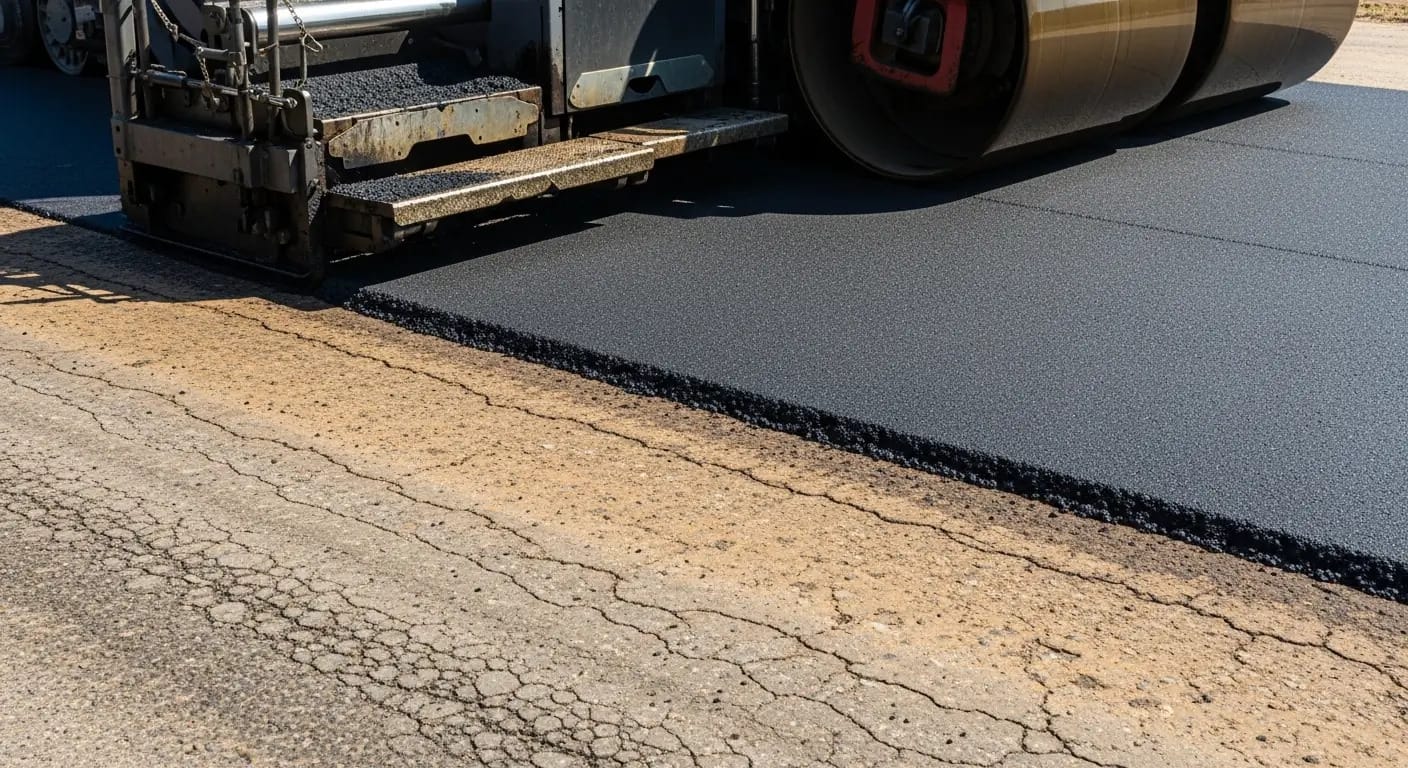
5. Overlay placement. We place new hot mix asphalt using a paver for consistent thickness and smoothness. Typical overlays in Phoenix range from 1.5 to 3 inches depending on traffic loads and the condition of the existing pavement. Residential driveways usually receive a thinner overlay than shopping center lots that carry delivery trucks.
6. Compaction and finishing. Steel drum and pneumatic rollers are used in a specific rolling pattern to achieve target density, which directly affects lifespan. We pay attention to joints, edges, and around utilities to avoid weak spots.
7. Striping and traffic control. After curing, we restripe with high visibility markings, adjust wheel stops, and update ADA compliance where required. We schedule work in phases to keep businesses operating and residential access as convenient as possible.
Material Options and Design Choices for Phoenix Overlays
Not all hot mix asphalt is the same, and local climate should drive the mix design. Precision Asphalt Phoenix works with Arizona approved mix designs that are proven to handle high surface temperatures. We typically recommend a dense graded mix with a performance graded binder formulated for the heat ranges seen on Phoenix pavements, which can reach well over 150 degrees at the surface.
For overlays that must stand up to heavy truck turning movements, such as at fuel stations or industrial properties, we may specify a mix with higher binder content or a slightly smaller aggregate size to resist shoving and rutting. On residential work, we balance performance with a smoother finish, since appearance and driveway comfort often matter more than heavy load capacity.
We also consider whether a leveling course is needed under the final surface course. In Phoenix, long term sun exposure can create depressions and bird baths that collect monsoon rain. A thin leveling pass allows us to correct grade and cross slope before placing the final overlay, which improves drainage and prevents standing water that can weaken the asphalt.
If you are planning future sealcoating or want a particular aesthetic, we can tailor the surface texture and recommend a maintenance schedule that fits. Our focus is on building an overlay system, not just a single layer, so that your resurfaced pavement holds up over time.
What Drives the Cost of Asphalt Resurfacing in Phoenix
Customers often ask why resurfacing quotes vary so much. Precision Asphalt Phoenix is transparent about what affects price so you can compare proposals intelligently.
Project size and shape are major factors. A large open parking lot allows efficient use of a paver and rollers, which lowers the cost per square foot. Tight residential driveways, complex islands, and many edges require more handwork and time. The required overlay thickness, typically between 1.5 and 3 inches, directly affects how much asphalt is needed and therefore the material cost.
Existing condition also matters. Lots with minimal base failures and only moderate surface wear are faster to prep. Properties that have many potholes, structural cracks, or past patchwork will need more saw cutting, milling, and base repair before an overlay is realistic. This upfront work protects your investment, and skipping it tends to cost more in the long run.
Local factors in Phoenix influence cost as well. Access for trucks and equipment, timing around extreme heat, and scheduling during non peak traffic hours can change labor and staging needs. We also take into account HOA rules or city requirements that may dictate striping layouts or ADA upgrades when resurfacing is performed. Our proposals clearly break out prep work, asphalt quantities, striping, and any optional items so you know exactly where your money is going.
Common Overlay Problems and How We Prevent Them
Resurfacing can fail quickly if it is done as a cosmetic cover up instead of a structural improvement. Precision Asphalt Phoenix focuses on preventing the issues we frequently see on older overlays in the Phoenix area.
Reflective cracking is the most common problem. Cracks in the old pavement can transfer up through the new layer if they are not treated. We reduce this risk with proper crack sealing, full depth repairs where needed, and in some cases thicker overlays or localized fabric interlayers in chronic cracking zones.
Slippage and shoving often show up where no tack coat was applied or where the existing surface was too dusty for bonding. Phoenix dust is persistent, so we invest additional time in mechanical cleaning and always use a correctly applied tack coat. This ensures the new asphalt and the old surface work together instead of sliding over each other.
Drainage issues are another failure point. If puddles remain after an overlay, water will sit, soften the asphalt, and accelerate raveling and cracking. Our crews check slope before paving, adjust grades with milling and leveling courses, and protect existing drainage structures so they function properly.
Finally, inadequate compaction can shorten pavement life. In summer, Phoenix heat can make achieving uniform density challenging. Our operators stage rolling patterns to compact while the mix is at the right temperature, and we check density in the field as needed. This attention to detail is what keeps your overlay from feeling spongy or rutting under traffic.
What Phoenix Property Owners Should Know Before Hiring
Choosing the right contractor for asphalt resurfacing in Phoenix is as important as deciding to resurface in the first place. Precision Asphalt Phoenix recommends that you ask any contractor to explain why resurfacing is appropriate for your pavement, what thickness they are proposing, and how they will address existing failures. If they cannot clearly describe their prep work and how they handle drainage, you may be looking at a short lived overlay.
For commercial properties, confirm how the contractor plans to phase the work so tenants and customers can still access the site. We routinely build phasing plans, set up clear traffic control, and schedule night or weekend work during cooler hours when needed to reduce the impact on busy centers.
Ask to see local resurfacing projects that are at least a few years old, not just fresh work. Phoenix climate is a real test, and past performance is the best proof. We can point to overlays we completed that have gone through several summers and monsoon seasons and are still performing.
Lastly, understand the maintenance cycle after resurfacing. A typical Phoenix overlay will benefit from its first sealcoat within 1 to 3 years, depending on traffic and exposure. We provide a written maintenance recommendation with every resurfacing project so you know how to protect your investment. When you work with Precision Asphalt Phoenix, you get a partner that understands local conditions, communicates clearly, and stands behind the asphalt resurfacing work long after the rollers leave your property.